Category: Time Management

Time management is not about doing more, but about living better.
This category focuses on helping you reflect, reset, and prioritize what matters most. So you can spend your time with greater clarity, meaning, and calm.

  • When the Words Are Right, But the Messenger Isn’t

    Why credibility shapes whether wisdom is heard – or ignored

    The difference is not always in the message, but in how, and by whom, it is presented.

    We like to believe that good ideas speak for themselves.

    That truth, once clearly articulated, will be recognized regardless of who delivers it.

    But human perception rarely works that way.

    Consider this – Two people offering the same business advice. The same insight. The same words, even.

    One is dismissed as unhelpful, perhaps even intrusive.
    The other is received with gratitude, maybe even praise.

    What changed?

    Not the content.

    The messenger.

    The Quiet Weight of Who Speaks

    There is a well-documented pattern in human psychology: we do not evaluate ideas in isolation.

    We evaluate them through the lens of who presents them.

    Title matters.
    Track record matters.
    Relationship matters.

    Before the mind even processes the advice itself, it has already asked three silent questions:

    – Does this person have authority to speak on this?
    (Position, credentials, visible success)

    – Has this person proven themselves before?
    (Past results, demonstrated competence)

    – Do I trust this person?
    (History of interaction, perceived goodwill)

    If the answer to all three is yes, the advice arrives pre-approved.

    If the answer is no, or worse, unclear, the same words become suspicious.

    Not because they are wrong.

    But because the mind is protecting itself from potentially poor guidance.

    When Experience Speaks Louder Than Logic

    I once offered an advice that seemed, to me, both obvious and useful.

    It was met with polite dismissal. Not outright rejection, but the kind of acknowledgment that signals the conversation is already over.

    Weeks later, someone else shared the same insight, nearly word for word.

    It was received as if it were revelation.

    The difference?

    They had a title that carried weight.
    They had a portfolio of proven results.
    They had an established relationship with the listener.

    I had none of these.

    And so, despite the accuracy of the advice, it could not land.

    The Unfairness We Pretend Doesn’t Exist

    It is tempting to feel slighted by this.

    To think: If the advice is sound, why does the messenger matter?

    But the truth is less about fairness and more about survival.

    The human mind evolved to assess credibility quickly.

    In a world where bad advice could mean real harm, financial loss, wasted time or strategic missteps, we developed shortcuts to filter signal from noise.

    One of the strongest shortcuts: source credibility.

    If someone has demonstrated success, their advice carries borrowed trust.
    If someone lacks visible proof, their words must work harder to be heard.

    This is not personal judgment.

    It is pattern recognition.

    And while it can feel unjust, it is also deeply human.

    The Messenger Effect in the Age of AI

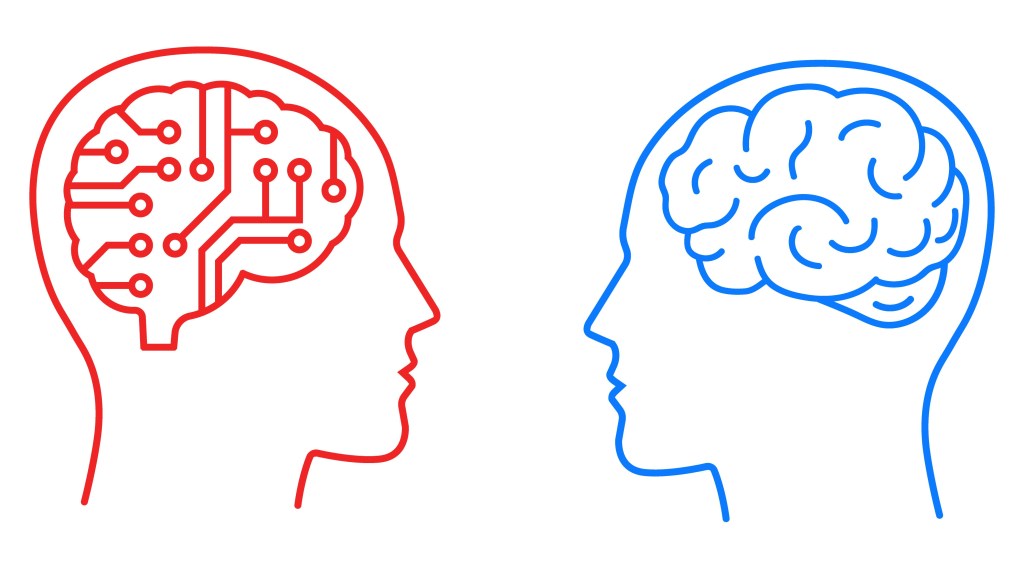
    Recently, with the rapid rise and commoditization of generative AI, I have begun to notice a new variation of the same pattern.

    Occasionally, someone will ask, sometimes half-curious, sometimes slightly triumphant:

    “Was this generated by AI?”
    “These slides are AI-written, right?”

    The tone often carries a quiet subtext, the satisfaction of having “seen through” the work.

    And each time, the same question returns to my mind:

    Does it actually matter?

    If the thinking is sound…
    If the insight is useful…
    If the decision improves because of it…

    What exactly has been invalidated?

    Yet the reaction itself is revealing.

    Because even in the age of intelligent machines, human judgment still reaches first for the same shortcut:

    Who, or what, is the messenger?

    When credibility is high, AI becomes an amplifier.

    When credibility is low or unclear, AI becomes a discounting mechanism.

    The technology may be new.

    But the psychology is not.

    What This Means for Those Still Building

    If you find yourself offering sound advice that goes unheard, the question is not:

    “Why don’t they see the value?”

    The better question is:

    “What signals am I sending about my credibility?”

    Because the advice itself may be only half the equation.

    The other half is context.

    Three quiet truths worth considering:

    1. Authority is often borrowed before it is earned

    If your advice lacks weight on its own, consider delivering it through someone who already has credibility.

    This is not manipulation.

    It is acknowledging that ideas often need a suitable vehicle to reach their destination.

    2. Track record can be built in small, visible ways

    If you lack formal credentials, results speak louder.

    Document outcomes.
    Share lessons learned.
    Build a quiet trail of evidence that your insights are grounded in experience, not just theory.

    3. Relationship opens doors that logic cannot

    The same advice lands differently when trust already exists.

    Before offering guidance, invest in genuine connection.

    Not transactionally.

    But thoughtfully.

    Because trust is not granted to strangers, no matter how wise their words.

    The Quiet Acceptance

    The goal is not to resent this pattern, but to understand it.

    To recognize that human beings are not machines processing pure information.

    We are pattern-seekers, risk-avoiders, relationship-builders.

    And so, when we speak, we are not just offering words.

    We are offering context.

    History.

    Proof of trustworthiness.

    The same advice from two different people is not, in fact, the same advice.

    Because words never arrive alone.

    They arrive wrapped in the story of who speaks them.

    A Gentle Reminder

    If your words are not yet being heard, it does not mean they lack value.

    It may simply mean the conditions for reception have not yet been built.

    So build them.

    Not by demanding to be heard.

    But by quietly earning the credibility that allows good ideas to land.

    Because in the end, the question is not:

    “Why don’t they listen to me?”

    But rather:

    “What kind of messenger am I becoming?”

    Actionable Reflection

    Think of a time your advice was dismissed.

    Now ask:

    – Did the listener have a reason to trust my expertise on this topic?

    – Had I demonstrated results in this area before?

    – What was the quality of my relationship with this person?

    If the answer to any of these is “no” or “unclear,” that may be where the work begins.

    Not in refining the advice.

    But in building the foundation that allows it to be received.

    In the end, the question is no longer whether the words were written by human or machine.
    It is whether the messenger has earned the trust for them to matter.

  • The Duchess Within Us

    When pressure rises, do we silently rewrite the rules?

    It was meant to be comedy.
    A match where the rules kept changing mid-fight.
    Where confusion was part of the entertainment.
    Where structure existed mostly in name.

    Twenty-five years ago, the Duchess of Queensbury match between William Regal and Chris Jericho was simply hilarious. One of those wonderfully absurd moments in wrestling history.

    But watching it again today, something felt different.

    In that match, the stipulations kept escalating.

    What began as a structured contest slowly turned into controlled chaos. It begins with a standard rule, then comes increasingly bizarre conditions which heavily favor one side, until the disadvantaged competitor appeared unsure what would come next.

    At moments, it felt less like a sporting contest and more like a game where the finish line kept silently moving.

    And beneath the laughter, an uncomfortable question surfaced:

    How often do we have a Duchess of Queensbury within ourselves?’

    Adjusting the rules when the situation stops going our way?

    When the Game Stops Going Smoothly

    In the match, every time momentum began to build, the rules shifted.

    Victory conditions changed.
    Interruptions appeared.
    The path forward kept changing.

    At the time, it was brilliant comedy.

    But in real life, the pattern is far less amusing, and far more disturbingly common.

    When pressure rises, many of us do not always push harder.

    Sometimes, we quietly redefine the finish line.

    • The deadline becomes “flexible.”
    • The goal becomes “good enough.”
    • The commitment becomes “situational.”

    Not always out of dishonesty or laziness.
    Often, out of something much more human.

    Self-protection.

    The Quiet Comfort of Moving Goal Posts

    Very few people wake up intending to deceive others (including ourselves).

    But many of us, at some point, have softened a target when it began to feel out of reach.

    We tell ourselves:

    • “This was the real intention anyway.”
    • “Circumstances have changed.”
    • “This version still counts.”

    And sometimes, to be fair, adjustments are necessary. Life is dynamic. Rigidity can be foolish.

    But the danger lies in how effortlessly the human mind can blur the line between:

    • Thoughtful Adaptation, and
    • Quiet Avoidance.

    The Duchess of Queensbury match was funny precisely because the rule-changing was so blatant and executed humorously.

    In life, it is rarely announced.

    Where This Shows Up in Everyday Life

    We see this pattern more often than we might like to admit.

    In workplaces, when KPIs are quietly re-framed after results disappoint.

    In personal goals, when ambitious plans slowly shrink into safer versions.

    In parenting, when standards shift depending on how tired we feel that day.

    Even in our relationship with technology, when tools promise efficiency, and we gradually outsource more judgment than we originally intended.

    None of this makes us weak.

    It makes us human.

    But awareness matters.

    Because what begins as a small adjustment can, over time, reshape our standards without us fully noticing.

    The Discipline of Staying Honest With Ourselves

    The real lesson from that absurd match is not about wrestling.

    It is about self-observation.

    There are moments in life when adjusting the rules is wise.
    There are also moments when it is simply more comfortable.

    The difficult part is telling the difference, especially when we are both the player and the rule-maker in our own lives.

    Progress does not always require rigidity.

    But it does require honesty with oneself.

    Sometimes the question worth asking is:

    Am I adapting sensibly…
    or am I just making the game more tolerable?

    A Small Reflection

    The Duchess of Queensbury match was designed for laughter.

    But like many things that appear silly on the surface, it carries an oddly enduring mirror.

    Because long after the bell rings and the crowd fades, one quiet truth remains:

    The most dangerous rule changes are the ones we quietly approve ourselves.

  • On Intelligent Machines and the Slow Erosion of Human Judgment

    A reflection on responsibility, autonomy, and the instinct we must protect.

    Have you ever heard a news organization says, “Please verify this yourself, we may be wrong”?

    Traditional media operates within an ecosystem of accountability. When errors occur, corrections are issued. When reporting is premature, reputations are at stake.

    Responsibility has a face, a name, and often a consequence.

    When artificial intelligence presents us with information, our reaction is noticeably different.

    We rarely pause to ask who stands behind the answer.
    We seldom question its lineage with the same intensity.
    Instead, we simply re-generate, refine the prompt, and continue reading.

    Responsibility dissolves into the background.

    This contrast reveals something quietly fascinating about human psychology.

    We tend to fear technologies that threaten the body more than those that influence the mind. Autonomous vehicles make many uneasy because the risks are visible: speed, machinery, physical harm. But when intelligence becomes automated, the risk is less perceptible. There is no dramatic moment, no sensory alarm.

    Only convenience.

    And convenience has always been persuasive.

    Throughout history, tools have extended human capability, and subtly reshaped the humans who use them.

    When the wheel was invented, distance shrank.
    When cars became common, walking gradually declined.
    When elevators spread, stairs became optional.
    When calculators entered classrooms, mental arithmetic faded.

    Each tool expanded our world.
    And each, in return, altered us.

    This is not a lament. It is a pattern.

    Tools amplify strengths, but unused faculties become weaker.

    What we no longer practice, we slowly lose.

    Intelligence outsourcing rarely feels like surrender at the beginning.
    It feels like efficiency.

    Why struggle to recall when something can retrieve the answer instantly?
    Why wrestle with ambiguity when a system can summarize it neatly?

    Technology does not erode human instinct overnight.
    It softens it through comfort.

    Perhaps the greatest risk of intelligent machines is not that they will think for us, but that we may slowly forget how to think without them.

    The question, then, is not whether machines can reason.

    It is whether we will continue to exercise judgment.

    This is not an argument against progress. Human advancement has always depended on the tools we build. Every meaningful invention has reshaped the structure of daily life.

    But tools were never meant to replace discernment.
    They were meant to support it.

    If traditional media is held to high standards of responsibility, it is because human intention remains visible within it. We expect accountability where a face and a name exist.

    When intelligence has no face, our expectations shift.
    Perhaps too easily.

    The responsibility now may not lie solely in regulating systems, but in cultivating awareness within ourselves – to question truthfulness, to verify when it matters, to resist the seduction of friction-less answers.

    Human instinct is not loud. It does not compete with speed or efficiency. But it has long been our quiet safeguard – the inner faculty that senses when something deserves a second look.

    In an age increasingly defined by seamless information, protecting that instinct may matter more than ever.

    The future may belong to intelligent machines.
    But it will depend on whether humans remain thoughtfully awake.

  • Proudly Quiet

    On Being Introverted in a World That Often Rewards Noise

    Introverted… yes, I am.

    And for a long time, I wondered if that was something I needed to overcome.

    The world often celebrates those who think aloud, respond quickly, and command attention without hesitation. In many spaces, the fastest voice is mistaken for the clearest mind, and presence is easily equated with volume.

    For years, I quietly questioned myself.

    Should I speak more?
    Respond faster?
    Be more expressive?
    More visible?

    Time, and some growth, brought me to a quieter realization:

    Introversion was never a flaw.

    It was simply my design.

    I am a proud ISTJ.

    Not because labels define me, but because understanding how I am wired has allowed me to stop resisting my nature and start working with it.

    Quiet Does Not Mean Empty

    There is a common misunderstanding that quiet people have less to offer.

    In truth, many introverts are not short of thoughts, we are often holding several at once. While conversations move forward, our minds are observing patterns, weighing possibilities, and connecting details others may overlook.

    We may not enter a discussion immediately.
    But when we do, it is rarely without consideration.

    Over time, I have learned that depth does not need to announce itself. It reveals itself in the quality of what is built, the steadiness of decisions, and the consistency of follow-through.

    Not everything meaningful needs to arrive loudly.

    The Strength of Preparation

    I do not enter every room with a strong presence.
    But I enter prepared.

    Where some rely on spontaneity, I have learned to rely on thoughtfulness. Preparation has become a quiet form of confidence.

    One that does not demand attention, yet rarely abandons me when it matters most.

    The world may notice charisma first.
    But it runs, more often than we realize, on reliability.

    And reliability is rarely loud.

    The Turning Point: No Longer Apologizing

    Perhaps the greatest shift did not happen when I understood introversion.

    It happened when I stopped apologizing for it.

    For a while, I stretched myself into shapes that were admired but unnatural – speaking when reflection would have served better, participating for visibility rather than contribution.

    Growth asks us to expand.
    But it should never require us to abandon our design.

    There is a quiet freedom that comes when you stop measuring your worth against someone else’s temperament.

    You stop performing.
    You start aligning.
    And things started, and naturally, falls in place.

    I no longer see quietness as something to overcome.
    It is the ground from which I stand.

    Energy Is Meant to Be Managed

    Introversion has taught me something invaluable: energy is finite.

    Not every invitation needs acceptance.
    Not every silence needs filling.
    Not every opinion requires immediate expression.

    There is strength in discernment, in knowing where your presence is most meaningful and where your energy is best conserved.

    When we stop scattering ourselves across every demand, we gain the ability to show up fully where it truly counts.

    Introversion is not withdrawal.

    It is intentional engagement.

    Quiet Builders

    The world will always have space for those who shine brightly and speak boldly.

    But it is also sustained by quieter builders – people who think carefully, act deliberately, and continue to burn steadily long after excitement fades.

    Much of what holds our lives together is created not through noise, but through patience.

    Not through display, but through quiet conviction.

    Great work does not always announce itself. Often, it deepens slowly, almost invisibly, before anyone thinks to call it great.

    Becoming More Yourself

    Today, I no longer wish to be louder than I am.

    Only steadier.
    Only clearer.
    Only more myself.

    Understanding who you are is not about placing limits on your growth. It is about removing the unnecessary friction of trying to become someone you were never meant to be.

    And there is a quiet strength in that.

    Not everything meant to last needs to begin loudly.

  • 成也文化,败也文化

    What Builds Us May Also Hold Us

    Growing up with Chinese New Year, the color red was never just a color, it was atmosphere, memory, and instruction.

    It appeared on our doors, our clothes, our envelopes, our decorations. Long before we understood symbolism, we understood participation. Red meant celebration. Red meant protection. Red meant we were part of something larger than ourselves.

    We did not pause to ask why.
    We simply followed.

    Only much later do many of us recognize something quietly remarkable: entire societies can organize themselves around stories.

    One of the oldest is the legend of the Nian – a terrifying mythical creature said to emerge at the turn of the lunar year, feared for bringing destruction to villages. The solution, according to folklore, was simple yet coordinated: wear red, light firecrackers, make loud noises, and stay awake through the night.

    Whether people today literally believe in such a creature is almost beside the point.

    What matters is what the story accomplished.

    It aligned behavior across families, communities, and generations. Strangers who would never meet still moved in cultural synchrony – decorating their homes, preparing reunion dinners, exchanging greetings shaped by centuries of repetition.

    Long before modern institutions existed, shared imagination allowed humans to cooperate at scale. In a reflection on Unity Under Pressure, I explored how common threats, real or perceived, often become the invisible glue that brings people together. Chinese New Year traditions may be one of the oldest cultural expressions of this same human instinct.

    Perhaps this is one of humanity’s quiet superpowers: our ability to act together not only because something is proven, but because something is collectively accepted.

    Culture, in this sense, is more than tradition.
    It is social coordination made visible.

    Yet embedded within this strength is a paradox captured by the Chinese phrase:

    成也文化,败也文化

    What builds us can also bind us.

    Culture gives us continuity. It offers belonging, identity, and a sense of orientation in the flow of time. Through rituals, we inherit emotional memory from people we may never have known.

    But the very forces that stabilize a society can, if left unexamined, begin to constrain it.

    Consider a familiar scene during the festive season: an elder gently, or sometimes firmly, disapproving of darker colored clothing, insisting that auspicious occasions call for brighter colors. Nearby, a younger family member chooses something understated, perhaps valuing personal expression over symbolic compliance.

    At first glance, it may appear to be a disagreement about color.

    More often, it is a quiet negotiation between preservation and autonomy.

    Neither side is entirely mistaken.

    One seeks continuity; the other, self-definition.

    Across cultures, similar tensions unfold wherever tradition meets a changing world. Successful patterns endure precisely because they once served an important function. Over time, however, the original reasons may fade while the behaviors remain.

    We inherit the practice, but not always the context.

    There is a well-known metaphor often shared in discussions of social behavior: a group learns to avoid a certain action because of an initial deterrent. Eventually, even when the deterrent disappears, the avoidance persists.

    Maintained not by understanding, but by imitation.

    Whether literal or illustrative, the lesson feels familiar.

    How often do we continue doing something simply because “this is how it has always been done”?

    Status quo remains status quo for a reason, but not always for a relevant one.

    And yet, recognizing this does not require us to reject tradition. Dismissing inherited practices too quickly risks losing the quiet wisdom they may still carry.

    After all, not every ritual is irrational. Many encode psychological insight long before psychology had a name. Gathering for reunion dinners strengthens kinship bonds. Visiting relatives renews social ties. Offering well-wishes reminds us that hope is, at heart, a shared effort.

    Perhaps the deeper invitation is not to abandon tradition, nor to obey it unthinkingly, but to understand it.

    When we understand what invisible role a custom once played: protection, cohesion, reassurance, we gain the freedom to decide how it might continue, evolve, or soften with time.

    Every culture walks this delicate line between honoring the past and making space for the present. What once safeguarded unity should not become a source of quiet division.

    To reflect on culture, then, is not an act of criticism.
    It is an act of care.

    For what we examine thoughtfully, we preserve more wisely.

    As the new year approaches and red once again fills our streets and homes, it may be worth pausing.

    Not to question the celebration, but to see it more clearly.

    Behind every ritual lies an old human hope: that by moving together, we may face the unknown with a little more courage.

    Culture has carried us far.
    Understanding it may carry us further.

    For in the end, what builds a civilization deserves not only our participation, but also our reflection.

    成也文化,败也文化.

  • What We Build, We Learn to Value

    On Turning the IKEA Effect into a Quiet Advantage

    We often hear about cognitive biases as flaws in human thinking. Tendencies that distort judgment and quietly shape how we assign value.

    Behavioral researchers once observed a curious tendency:
    We often value things more when we help build them.
    This became known as the IKEA Effect.

    At first glance, it appears irrational. Why should a slightly crooked table feel more precious than a perfectly crafted one?
    Simply because we built it ourselves?

    Yet, perhaps this bias is not a weakness to eliminate, but a force to understand, and even to use wisely.

    The Bias Is Not the Problem – Unconscious Living Is

    The danger of the IKEA Effect is not that we value our own work.

    The danger lies in valuing without awareness.

    Left unseen, it can quietly anchor us to things that no longer serve us:

    • Staying too long in projects we should release
    • Defending ideas simply because they are ours
    • Holding onto systems that have outlived their usefulness

    But when recognized, the same psychology becomes something else entirely:

    A quiet generator of meaning.

    Effort changes how the mind assigns value.

    We do not merely appreciate the object, we remember the hours, the decisions, the small acts of persistence embedded within it.

    Value is no longer found only in the outcome.

    It begins to live within the participation itself.

    Why a Refillable Notebook Feels Different

    A disposable notebook is complete the moment it is purchased.

    A refillable notebook is not.

    It asks something of you.

    To choose the paper.
    To rearrange the sections.
    To decide what deserves to be kept, and what can gently be released.

    Over time, the notebook stops being a product.

    It becomes evidence of authorship.

    Not perfection.

    Authorship.

    And authorship invites care.

    This is the IKEA Effect at its quiet best:

    What we help shape, we are less willing to abandon.

    Not because it is expensive, but because it carries traces of our attention.

    Life Is Less Like Buying Furniture and More Like Assembling It

    Modern life tempts us with ready-made paths.

    Optimized routines.
    Predefined success markers.
    Templates for how a life should look.

    Yet the lives that feel most meaningful are rarely pre-assembled.

    They are:

    Adjusted.

    Rebuilt.

    Questioned.

    Refined.

    Sometimes slowly.
    Sometimes messily.
    But always personally.

    The IKEA Effect reminds us of something worth remembering:

    Meaning tends to grow wherever effort has been invested.

    Not all effort is wise, of course. Discernment still matters.

    But a life assembled with care, rather than inherited by default, begins to feel unmistakably like one’s own.

    Turning the Bias Into an Advantage

    Instead of resisting this tendency, we might gently ask:

    Where is effort worth investing?

    A few quiet places come to mind:

    • Designing your own systems rather than copying blindly
    • Writing thoughts instead of only consuming information
    • Building rituals that reflect personal values
    • Revisiting and refining – rather than constantly replacing

    When participation increases, attachment often deepens.

    And sometimes, attachment is precisely what sustains consistency.

    A Gentle Caution

    There is wisdom in remembering that not everything we build is meant to be kept. Growth occasionally requires disassembly.

    Yet the same effort that teaches us to value what we create can also make it harder to release what no longer serves us. Psychologists describe this as the sunk cost fallacy – our quiet reluctance to let go after investing time, energy, or care.

    What begins as meaningful participation can slowly turn into unnecessary attachment. The goal, then, is not stubborn holding, but conscious authorship.

    To care for what remains life-giving, and to release with clarity when the time comes.

    Closing Reflection

    Perhaps the IKEA Effect is not a psychological flaw after all.

    Perhaps it is a quiet invitation:

    To move from consumer to participant.
    From receiver to creator.

    Because what we help build, we are far more likely to value.

    And what we value we are far more likely to tend to.

    In the end, perhaps the goal is not to build perfectly, but to build consciously, so that what we shape, quietly shapes us in return.

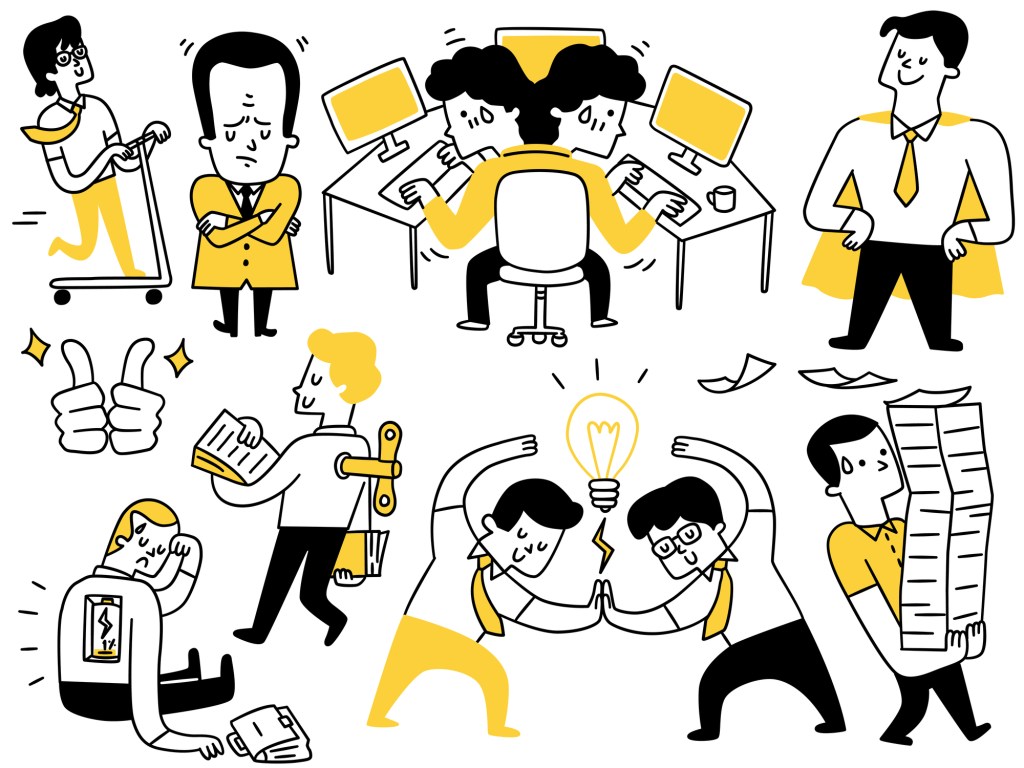
  • Busy? Or Just Believing You Are?

    We often assume that our judgments are rational.

    That we see people, situations, and even ourselves as they truly are.

    But human perception is rarely that neutral.
    More often than we realize, a single dominant signal quietly shapes the way we interpret everything else.

    Psychologists sometimes describe this as a cognitive shortcut: when one strong impression forms, the mind begins to color the whole picture around it.

    Success can make someone appear more credible than they truly are. A single mistake can cause everything else to be viewed through a harsher lens.

    Perception, once formed, is remarkably persuasive and this pattern does not only apply to how we see others.

    It also shapes how we see our time.

    When One Signal Becomes the Whole Story

    Consider what happens when you glance at a heavily-packed schedule.

    Meetings stacked back-to-back.
    Tasks spilling into the evening.
    Reminders nudging for attention.

    Within seconds, a conclusion arises:

    “I have no time.”

    But pause for a moment.

    Is it always true?
    Or has the appearance of fullness become the story we tell ourselves?

    The mind prefers quick interpretations.
    A crowded schedule becomes a powerful visual cue, and from that single cue, a broader identity quietly emerges:

    I am busy.
    I am stretched.
    My days are spoken for.

    Over time, this stops being an observation.

    It becomes a belief.

    The Hidden Cost of That Belief

    Busyness itself is not the problem.

    A fully-packed life can be a meaningful life.

    The hidden cost surfaces when busyness hardens into self-definition, when we stop examining whether every commitment still deserves its place.

    Because once the mind accepts “I have no time,” something subtle begins to happen:

    We decline opportunities without fully exploring them.
    We protect routines that may no longer serve us.
    We assume that time spaciousness belongs only to some distant future.

    Doors close quietly

    Often before we even reach for the handle.

    Not because time is absent,but because possibility no longer feels available.

    The Psychology of White Space

    Interestingly, many intentional individuals do not strive to fill every hour.

    They protect white space.

    Not as laziness.
    Not as inefficiency.

    But as psychological breathing room.

    White space signals freedom to the brain.
    It restores our sense of choice.

    Without it, even small requests can feel intrusive.
    With it, we respond with greater clarity and intention.

    What changes is not the number of hours, but our relationship with them.

    Busyness as an Identity

    There is another layer worth noticing.

    Sometimes, without meaning to, we become attached to the idea of being busy.

    “Things are crazy lately.”
    “I barely have a moment.”
    “It’s been non-stop.”

    At first, these phrases describe reality.

    But repeated often enough, they begin to shape it.

    Busyness gains a quiet prestige in modern life.
    It can signal importance, relevance and momentum.

    Yet a life constantly announced as overwhelming rarely leaves room for reflection where a reflective mind is where direction is refined.

    The question, then, is not whether we are busy as most adults are.

    The gentler question is:
    Has busyness become a belief? One we no longer question?

    Seeing More Clearly

    Awareness alone can soften this pattern.

    The next time your schedule looks impossibly full, pause before accepting the conclusion it presents.

    Ask instead:

    • Is every commitment equally necessary?
    • What would happen if one ‘task’ were to be removed?
    • Where is my white space?
    • Am I guarding my time, or merely reacting to it?

    Often, clarity does not require a dramatic life change.

    Only a willingness to see beyond the first impression.

    Because a calendar, like any representation, tells a story.

    And stories can be revised.

    In an earlier reflection, I wrote about keeping time for yourself, not as a luxury, but as a quiet necessity.
    Perhaps seeing our time clearly is where that keeping begins.

    A Quiet Reminder

    Perhaps the goal is not to eliminate busyness altogether.

    But to remain its author, rather than its subject.

    To remember that time is not only something we spend,
    but something we shape and utilize.

    And sometimes, the most important freedom is simply this:

    To recognize that the feeling of having no time
    may begin not in the clock…but in the mind.

    Perhaps we do not always need more time.
    Sometimes, we simply need to see it more clearly.

  • The Tools That Respect the Human Mind

    Life is short, use tools that give you more time to think, create, and live.

    We often search for better ideas, better focus, better clarity. However, we rarely ask whether the tools we use are helping or hurting the way we think.

    Good tools do not make us faster. They make us more intentional.

    Here are three simple choices that quietly support better thinking in everyday life.

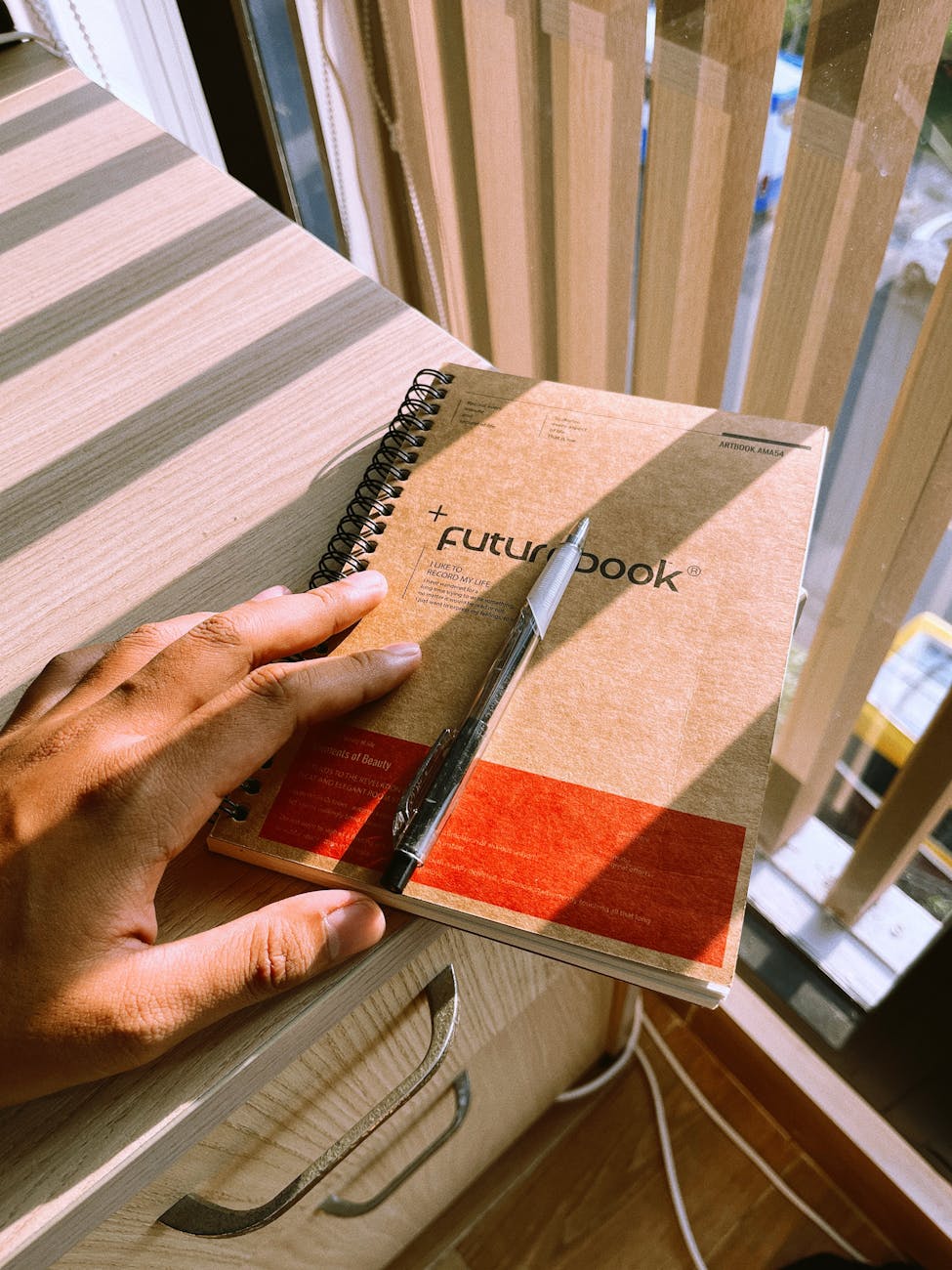
    1. Writing by Hand: Thinking at the Speed of the Brain

    There is something deeply human about writing with our hands. When we write, we are not just recording words, we are processing thoughts through movement, touch, and rhythm.

    This physical act creates a stronger connection between mind and memory, which often leads to deeper understanding and clearer ideas.

    Typing, on the other hand, is fast. Sometimes too fast. Our fingers can outrun our thinking. Writing slows us down just enough for the brain to catch up.

    And slowing down is often where clarity begins.

    2. Slowness Filters What Truly Matters

    Writing by hand takes effort. You cannot capture everything, and that is exactly the point.

    Limited space and slower speed force us to ask:
    Is this worth writing down?
    How can I summarize so that I can truly understand it?

    There is a story of a lecturer who walked into a classroom filled with students typing on their laptops and said,
    “Please do not type every single thing I say.”

    Moments later, many screens displayed the sentence verbatim:
    “Please do not type every single thing I say.”

    While this is an exaggerated example, it is also painfully familiar.

    When our tools allow us to capture everything verbatim, we stop deciding what matters. But when space is limited, we are forced to make choices. We summarize. We reflect. We prioritize.

    And in that act of choosing, real thinking begins.

    3. Refillable Planners: When You Build It, You Use It

    Flexibility is not just about convenience and practical functionality, it shapes our relationship with the tool. A refillable planner allows you to rearrange pages, add what you need and remove what no longer serves you. It becomes something you actively shape, not just consume.

    There is a concept in psychology called the IKEA Effect. People tend to value things more when they are involved in building them. Even small effort creates emotional attachment. When you assemble your own planner system, it becomes your very own thinking space, not just a product you bought. And when we cherish something, we return to it more often. We engage with it more seriously. Better tools don’t just organize our schedules, they invite us into reflection.

    We think with it, not just write in it.

    Choosing Tools That Give Time Back to Thinking

    Not every tool needs to be fast. Not every system needs to be automated. Sometimes, the best tools are the ones that slow us down just enough to reduce noise and protect our mental space

    Life is short…

    Not because we should rush, but because our attention is precious. When we choose tools that respect how the human mind works, we give ourselves more room to think, more mental capacity to focus, and more time to live with intention.

    In a world that records everything, the ability to choose what matters may be one of the most human skills we have left.

  • Time – Kept for yourself

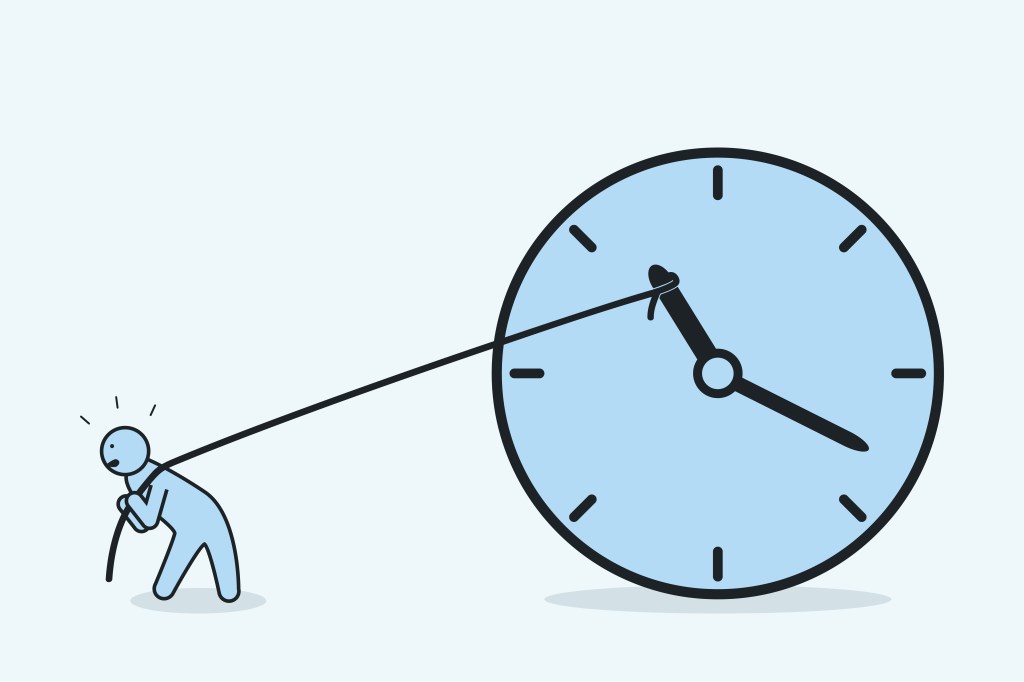
    Time is the most equitably distributed asset that every individual possesses, unaffected by societal status or wealth. Each of us has the same 24 hours in a day. No more, no less. Yet, it’s common to find ourselves pondering, “After being busy all day, what have I actually achieved?” or wishing for “just one more hour in the day,” and questioning, “Where has my time gone?”

    This reflection was inspired by the Chinese song “Where Has the Time Gone?” (时间都去那儿了?Shí jiān dōu qù nǎ le) performed by Reno Wang. It stirred within me the desire to share these thoughts and the often untapped potential of your diary.

    While keeping the original meaning intact, I’ve made slight adjustments to improve readability in English.

    Here is an extract of the song:
    Where has the time gone?
    Before we could fully experience youth, we've aged
    Raising sons and daughters for a lifetime
    Has filled my mind with the cries and laughter of children

    As the father of a 3-year-old boy, I have often heard people from all walks of life remark, “Kids grow up so quickly,” and suddenly, they’re adults before you realize it. This sentiment didn’t fully resonate with me until my son turned three in what felt like the blink of an eye. When you think about it, if children grow up ‘fast’, it implies that our parents age ‘fast’ as well.

    So do we.

    Yet, ‘fast’ is subjective. Given that ‘time’ ticks at a uniform rate for everyone, how does the concept of ‘fast’ emerge? The explanations include investing excessive time and energy in others, neglecting personal ‘me-time’ to genuinely savor moments alone, and engaging in unnecessary activities or simply squandering time.

    This realization led me to reflect on how I’ve been spending my time, and how I might want to spend it more intentionally in the future.

    Actionable advice:

    1. Review

    Flip through your monthly, weekly, or daily pages and observe your usual days. Are they filled with meaningful tasks, unavoidable responsibilities, or activities that keep you busy but leave you feeling empty?

    Do these activities drain your energy or nourish your spirit?

    2. Remove

    Highlight the activities that are “not good” for you, and list them on a note page. This becomes your personal “avoid” page — a reminder of what to say no to in the future.

    3. Revitalize

    Next, use a year planner (usually one page for the whole year with small daily grids) and mark the days, dates, and occasions that truly matter to you and are fixed. For example, birthdays and anniversaries.

    These are not just reminders; they are non-negotiable time you’ve intentionally kept for yourself and your loved ones. So the next time an invitation comes in, instead of accepting it spontaneously over the phone or through a quick message, take a step back and flip through your planner. Ask yourself: Is this a time I’ve already reserved for myself, or is it truly a free slot? This small pause helps you make decisions more consciously, and protects the moments that matter most to you.

    The key word here is: truly matters.
    Remember, this is your time, kept for yourself.

    Tip:
    We recommend using a refillable diary planner, so you can move your “avoid” page to any section of your book, keeping that reminder close, whenever you need it.

    Summary
    In the end, a diary is not just a place to record what you have done, it is a space to remember what truly matters to you. When you review, remove, and revitalize how you spend your days, you begin to live more intentionally, not just busily. So before time slips quietly past again, pause, reflect, and choose what deserves a place in your life.

    Make time for yourself, because your time is your life.

    If any part of this reflection resonates with you, or if you have any questions, please feel free to reach out, I’d be more than happy to connect.

  • The Human Art of Futuring Through Notes

    Discover the transformative power of handwriting with FuturingNote.com, where ancient wisdom meets modern introspection. Dive into the art of ‘futuring’, using notebooks to navigate life’s journey with intention. Embrace this call to reconnect with the ‘human’ in us, transcending the digital divide, one heartfelt note at a time.

    Actionable advice:
    To begin, ask yourself two simple yet deeply personal questions:

    1. One task that felt meaningful
    2. One task that felt draining

    It can be anything, and from any time frame. Today, this week, or even an ongoing responsibility.

    There are no right or wrong answers. What matters is noticing how different parts of your day make you feel. Over time, these small observations reveal powerful patterns about where your energy is going, and where your future may be quietly pointing toward.

    If this reflection resonated with you, you’re welcome to subscribe and continue this quiet journey with me…